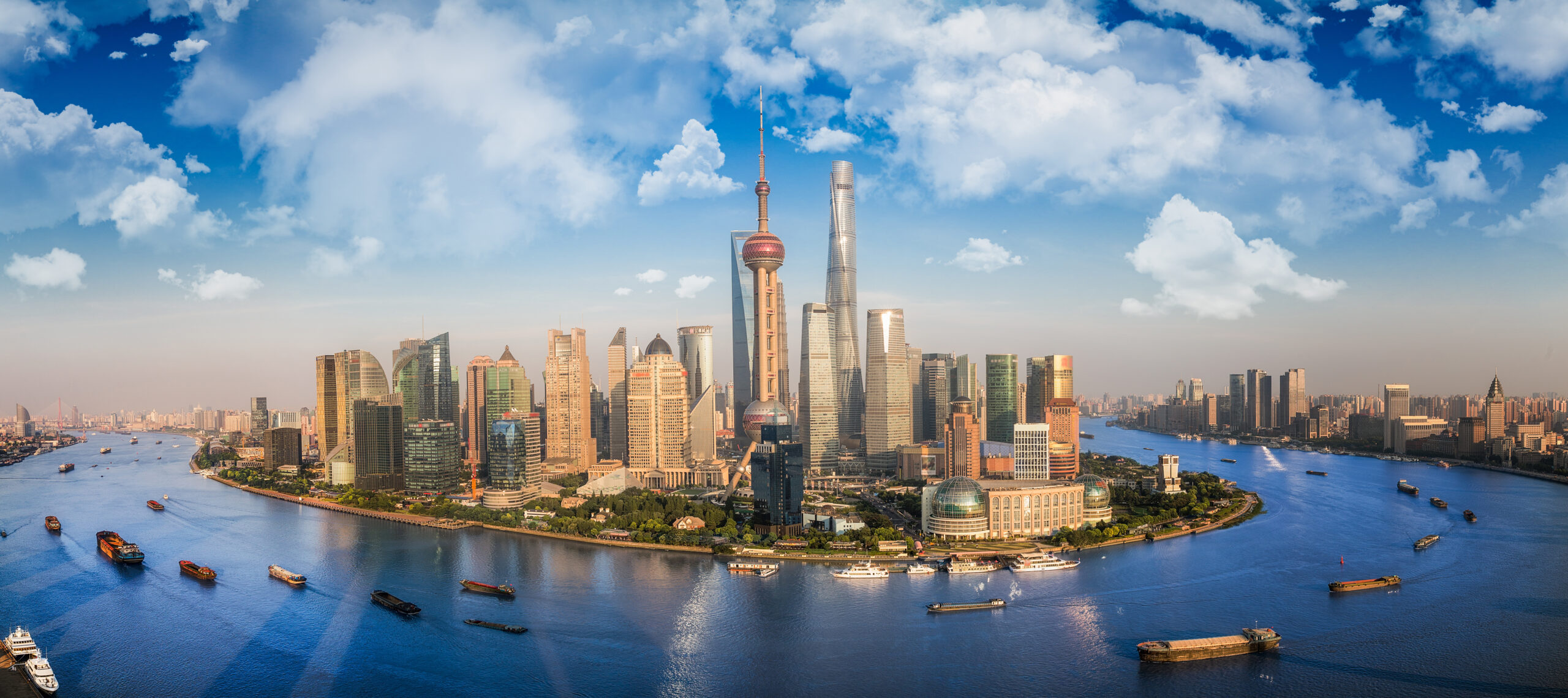
Shanghai is a city that demands your attention. From the futuristic, cloud-piercing skyline of Lujiazui to the historic charm of the water towns, it is a sensory overload in the absolute best way possible. It’s vibrant, fast-moving, and incredibly exciting. But for our community of explorers on wheels, a mega-city like this often raises a very big, very important question: Is Shanghai accessible for wheelchair users?
We know the anxiety that comes with booking a trip to Asia if you have mobility needs. You worry about the crowds, the infrastructure, and whether you’ll be stuck in your hotel room instead of eating dumplings on the Bund. We are here to put those worries to rest and give you the real scoop.
The short answer? Shanghai is one of the most wheelchair-friendly cities in China. It has modernized rapidly, and while accessibility can be inconsistent depending on which neighbourhood you are rolling through, it is absolutely an achievable and rewarding destination. With a little bit of planning and the right mindset, you can experience the magic of the Pearl of the Orient.
Here is everything you need to know to navigate Shanghai safely, comfortably, and with maximum enjoyment.
Navigating the Public Transport System
Getting around a city of 26 million people sounds daunting, but Shanghai’s infrastructure is surprisingly robust. Here is how the different modes of transport stack up for wheelchair users.
The Shanghai Metro (Subway)
We are huge fans of the Shanghai Metro. It is massive, modern, clean, and for the most part, very accessible. If you are used to the struggles of older subway systems in cities like New York or Paris, you will be pleasantly surprised here.
Most stations – especially the newer lines and those in central tourist districts – are equipped with elevators. The gap between the train and the platform is generally quite small, and the trains level out well with the platform, making boarding and disembarking relatively smooth. You will also find clearly marked priority seating and dedicated wheelchair spaces on the trains.
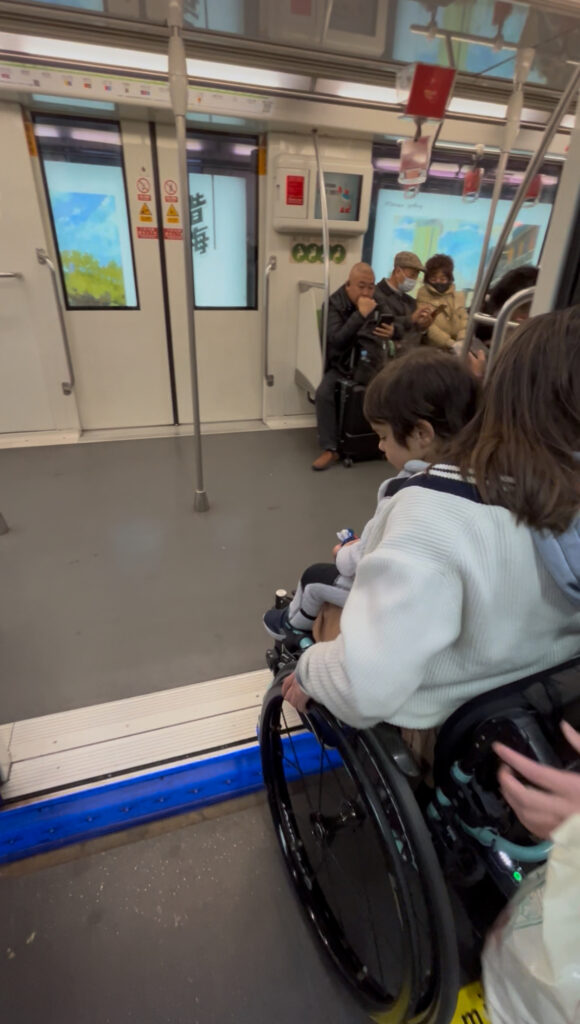
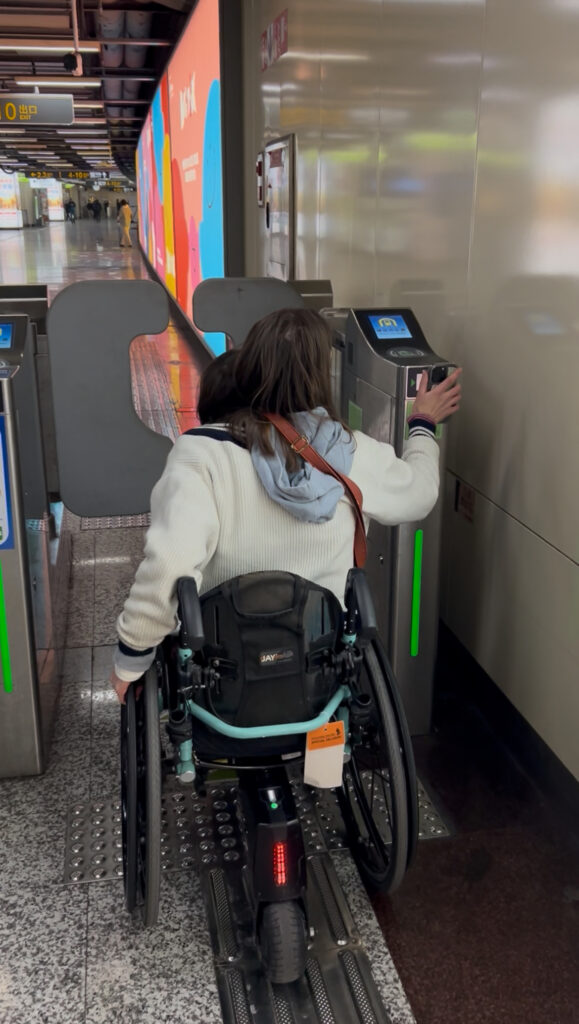
There are a few things to keep in mind to keep your journey smooth:
- Hidden Elevators: In some older stations, the elevators aren’t always in the most obvious spot. You might need to hunt around a corner or ask a staff member. Many of them need a staff member to activate them.
- The Crush: Shanghai rush hour is no joke. Between 7:00–9:00 am and 5:00–7:00 pm, the crowds can be overwhelming and stressful if you are in a chair. We highly recommend planning your travel outside these windows.
- Station Exits: Not every single exit at a station will have an elevator. Always check the station maps or signage to ensure you are heading toward an accessible exit so you don’t get stuck at the bottom of a flight of stairs.
Pro Tip: Don’t be afraid to ask for help! The station staff in Shanghai are generally incredibly helpful and will often escort wheelchair users from the ticket barrier to the elevator, and then to the platform.
buses
While the metro is a star of the public transport system in Shanghai, the bus system gets a mixed review. The city is in a transition phase; many newer buses are equipped with low floors and ramps, making them easy to use. However, plenty of routes still rely on older, high-step buses that are impossible for wheelchair users to board.
Additionally, even when a bus is accessible, drivers may not always automatically deploy the ramp unless you clearly signal for it. Because of this inconsistency, we usually recommend sticking to the metro or ride-hailing apps for a stress-free day.
Taking the Ferry Across the River
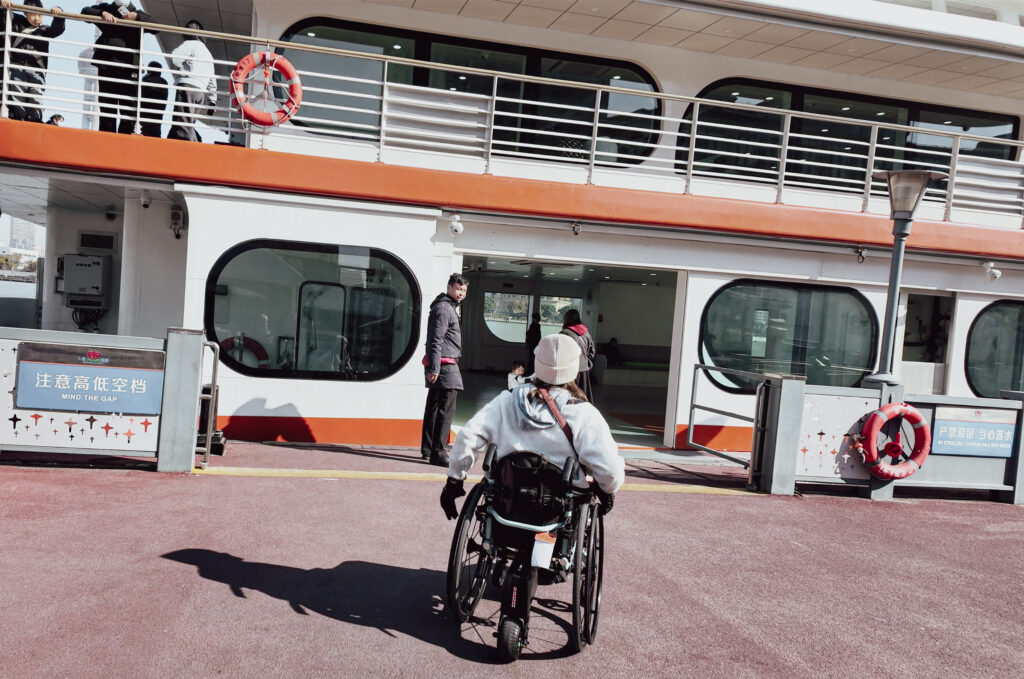
One of Shanghai’s most iconic experiences is crossing the Huangpu River on the public ferry – a wonderful way to enjoy amazing skyline views and get a sense of the city’s vibrant rhythm! The ferries connect various points along the Bund and Lujiazui, making it easy to hop across for sightseeing or a fun detour.
Most ferry terminals have ramps and wide boarding areas, and the staff are usually happy to help if you need a hand – just smile and ask! The ferries themselves have open, level spaces suitable for wheelchairs, and boarding is typically smooth, especially during non-peak hours. As always, double-check the local terminal for any temporary construction or maintenance that might affect accessibility.
taxis and ride-hailing apps
If you want door-to-door convenience, you can use DiDi – the ride-hailing service similar to Uber. This can be easily accessed via the Alipay app. You can request larger vehicles like SUVs or vans, which usually accommodate foldable manual wheelchairs quite easily.
Accessible taxis specifically designed for power chairs are available in the city, but they are limited in number and can be hard to book as they require a telephone call. If you can’t transfer from your wheelchair or prefer to stay in your own chair, plan 1–2 days ahead and ask your hotel concierge to book the transport for you.
We booked an airport transfer via Klook and loved our driver and his van so much we got his contact details and utilised his services several times during our stay in Shanghai!

How to Pay with Alipay
Paying for your ride on the Shanghai public transport system (or taxi service) couldn’t be simpler. Alipay is widely accepted across all services – just scan the QR code posted at the entrance or ticket window using the Alipay app on your phone. Select the payment amount, confirm with your PIN, fingerprint, or facial recognition, and you’re good to board!
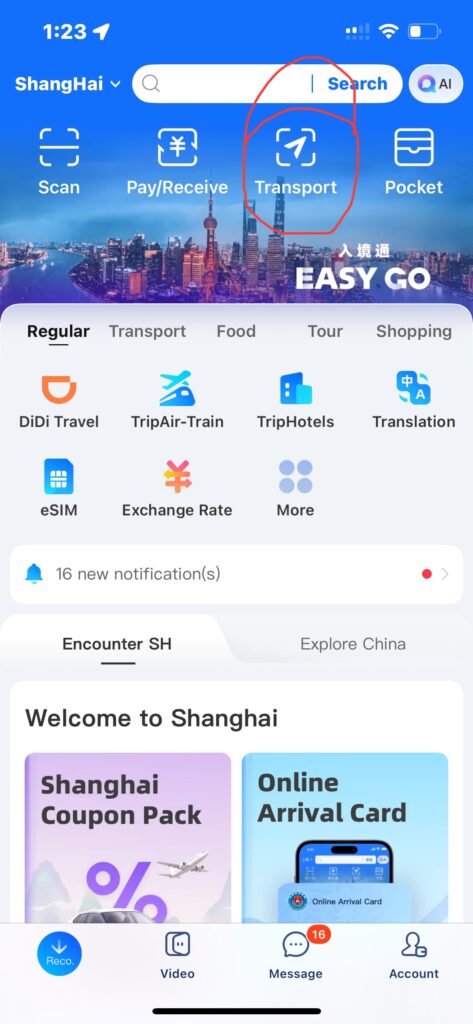
If you need help, don’t hesitate to ask the friendly ticket staff – they see lots of travellers with questions and are used to helping out. If you need any help setting up Alipay before your leave for your trip to China get in contact with us here.
Sidewalks and City Navigation
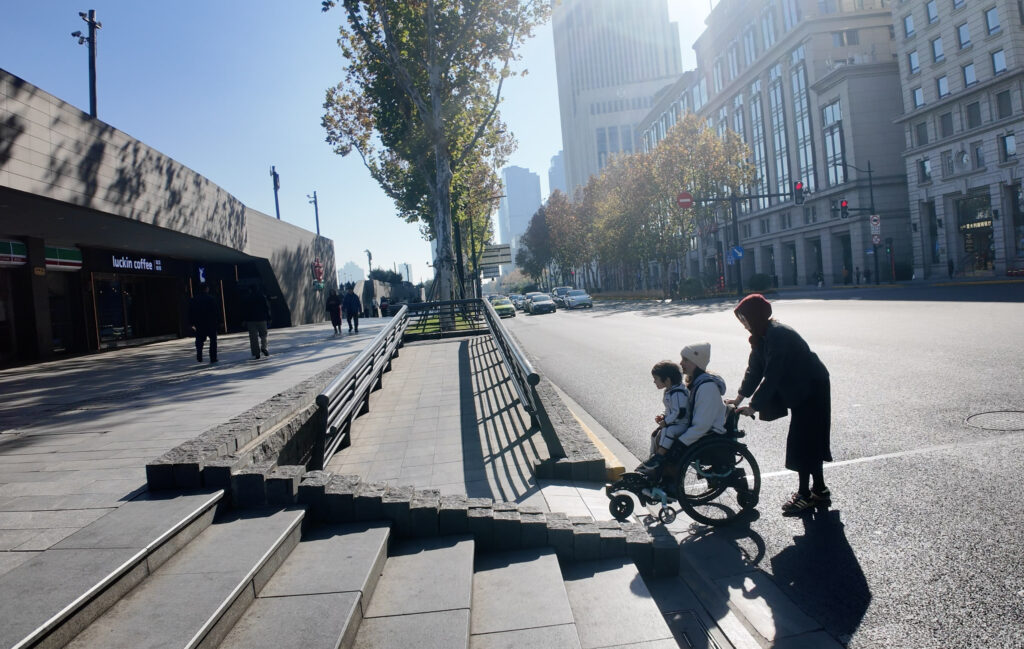
Rolling through the streets of Shanghai is an adventure in itself. The city is improving its streetscapes rapidly, but it’s still a mixed bag.
The Good News: Major roads and central business districts almost always have curb cuts and smooth pavement. The newer districts, like Pudong, were built recently and are generally well-designed for wheels.
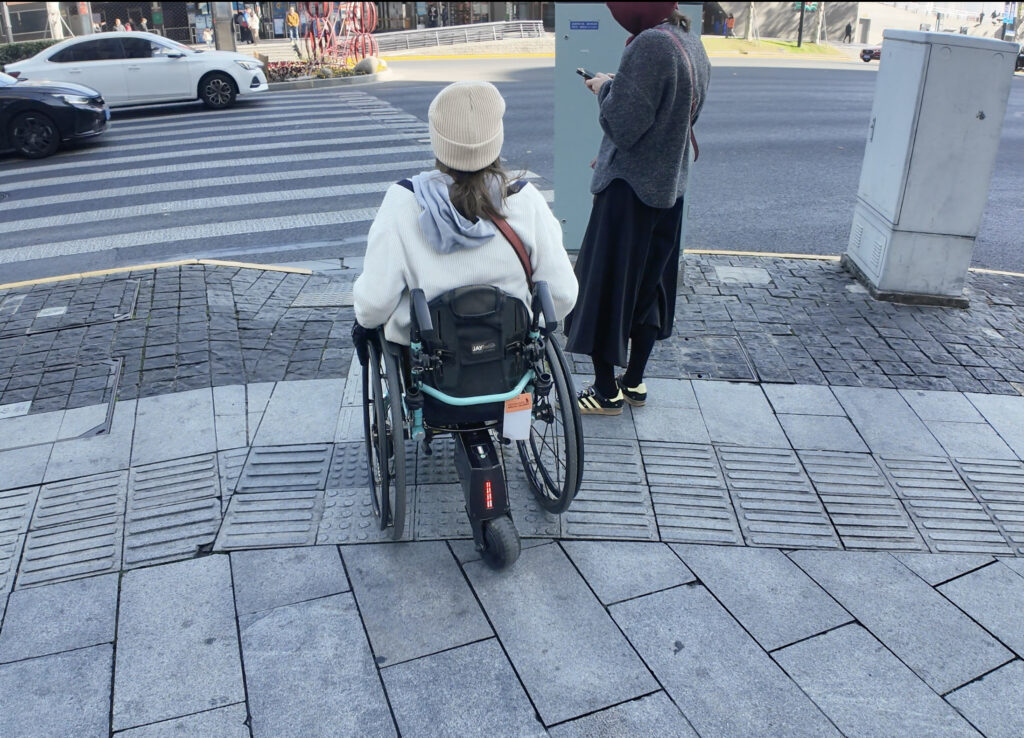
The Challenges: You need to keep your eyes on the path. It is very common to find electric scooters parked right in the middle of the sidewalk, blocking your path. You might also encounter temporary construction ramps that are a bit steep or uneven and broken pavement in older, charming neighbourhoods. Patience is key here. Sometimes you might need to backtrack slightly to find a curb cut or a clear path.
Pro-Tip: Bring your passport everywhere: it is your safest form of identification. You will need it to check into hotels, purchase long distance train tickets, and sometimes even to enter certain tourist attractions.
Top Accessible Attractions in Shanghai
You didn’t fly all the way to Shanghai just to look at the traffic. Here is how accessible the top sights are.
Most of Shanghai’s headline attractions have made real efforts to welcome visitors of all mobility levels. Wheelchair users will find that many landmarks offer step-free entrances, ramps, and accessible restrooms. Plus, clearly marked signs (sometimes in English!) help you find the smoothest routes.
The Bund & Pudong Waterfront
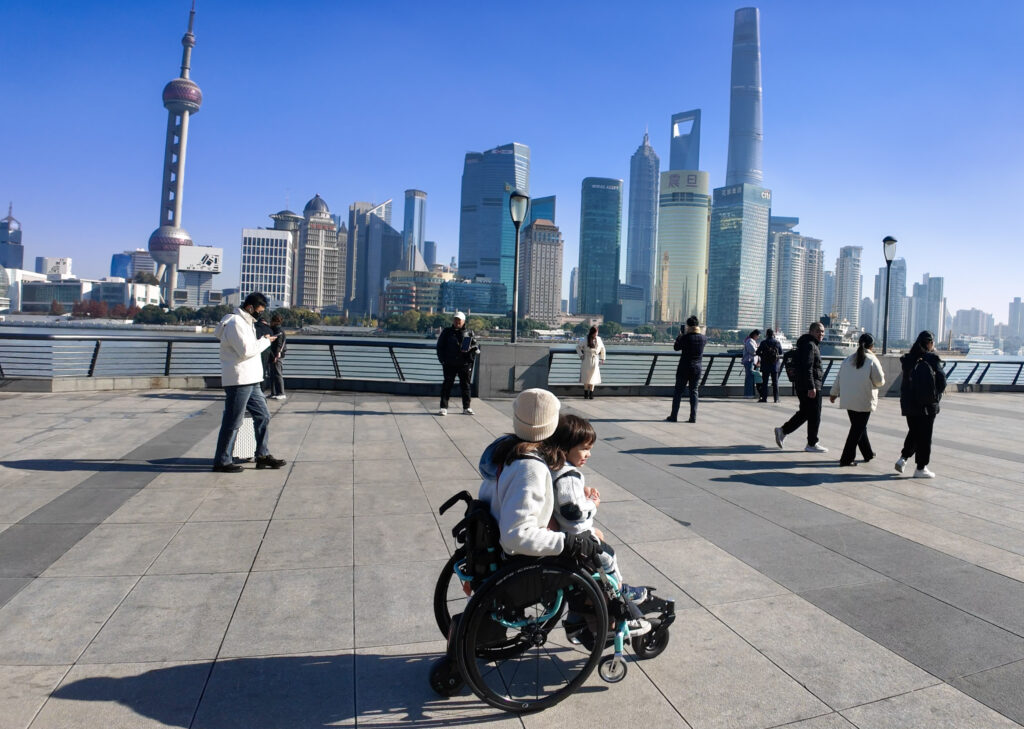
This is the postcard view you came for, and we are thrilled to report that both sides of the Huangpu River are very wheelchair-friendly. The promenades are wide, paved, and smooth, offering plenty of step-free access points. And you can catch the wheelchair accessible across the river!
You can roll along the waterfront for miles, soaking in the view of the colonial architecture on the Puxi side and the sci-fi skyscrapers on the Pudong side. There are also plenty of seating areas if you or your companions need a rest. It is arguably the most accessible sightseeing experience in the city.
Yu Garden & Old Town
This area offers a stunning glimpse into traditional China, with its classic architecture and bustling bazaars. However, from an accessibility standpoint, it presents a challenge.
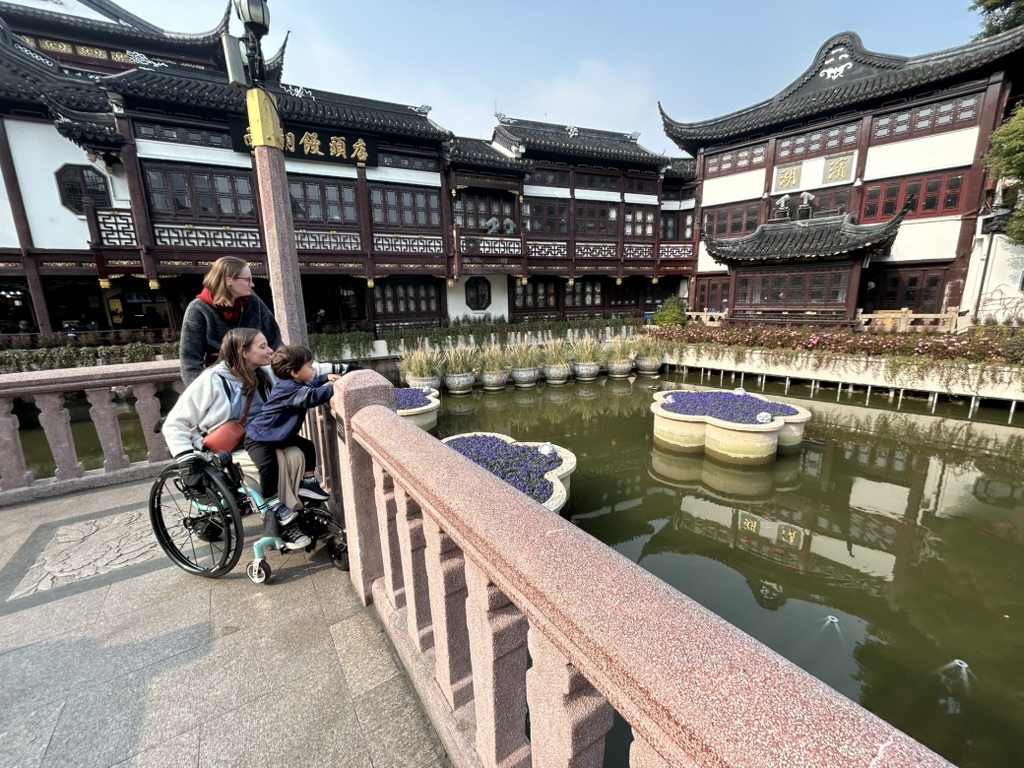
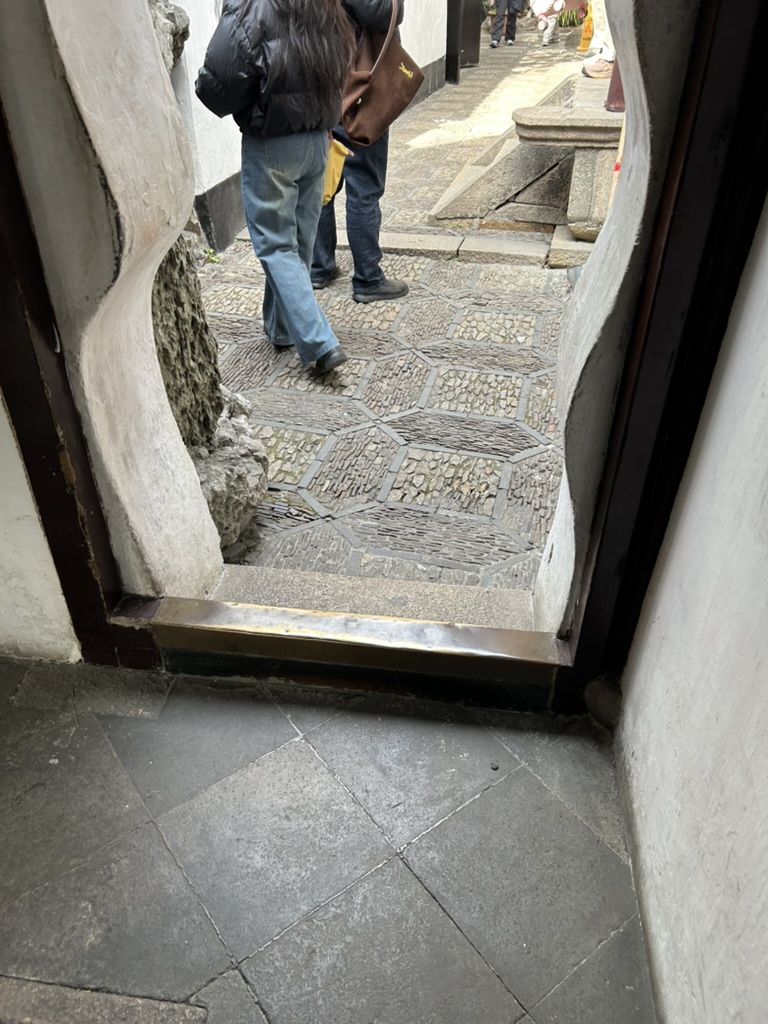
The area is paved with cobblestones and uneven surfaces that can be jarring for wheelchair users. The pathways are often narrow, and many of the charming little tea houses and shops have high thresholds or steps at the entrance. While you can certainly roll around the perimeter and soak up the atmosphere, exploring the deep interior of the gardens or entering the shops might not be fully possible without assistance.
Oriental Pearl Tower
No trip to Shanghai feels complete without gazing up at the futuristic spires of the Oriental Pearl Tower—and the good news is, this iconic landmark is ready to welcome visitors of all abilities!
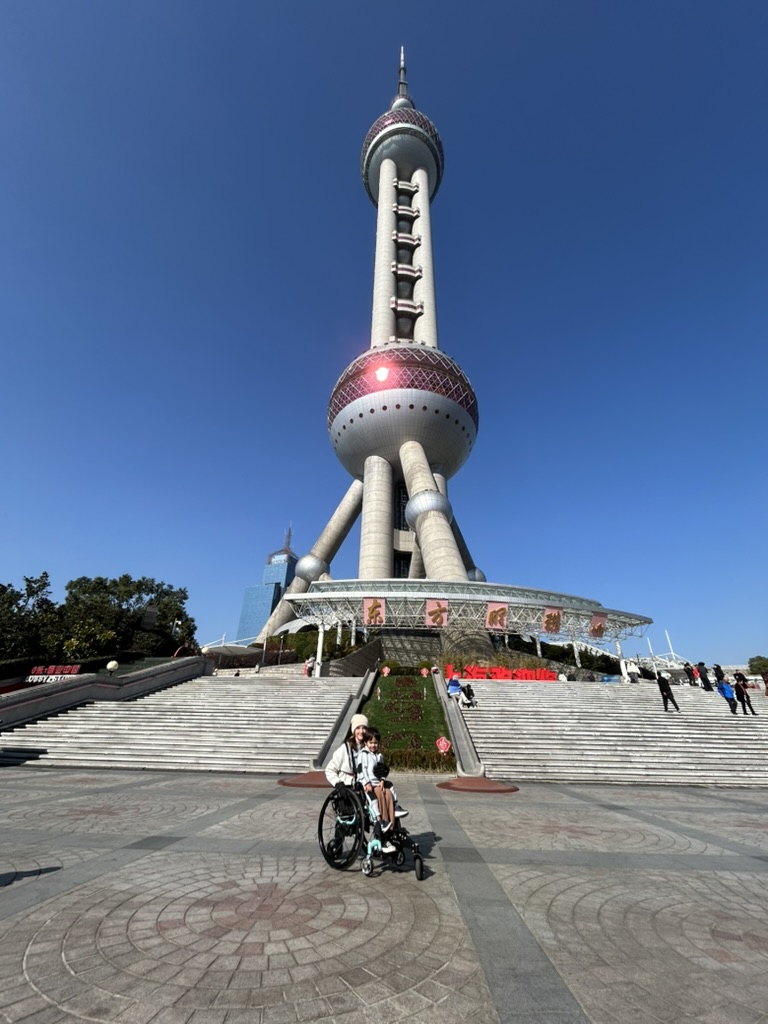
Step-free access is available right from the main entrance, and attentive staff can assist with navigating security checks. Wide automatic doors make entry a breeze, while spacious elevators whisk you up to the observation decks without the need to tackle any stairs. Once inside, clear signage helps guide you to accessible areas, and the elevators are large enough to fit most standard wheelchairs comfortably.
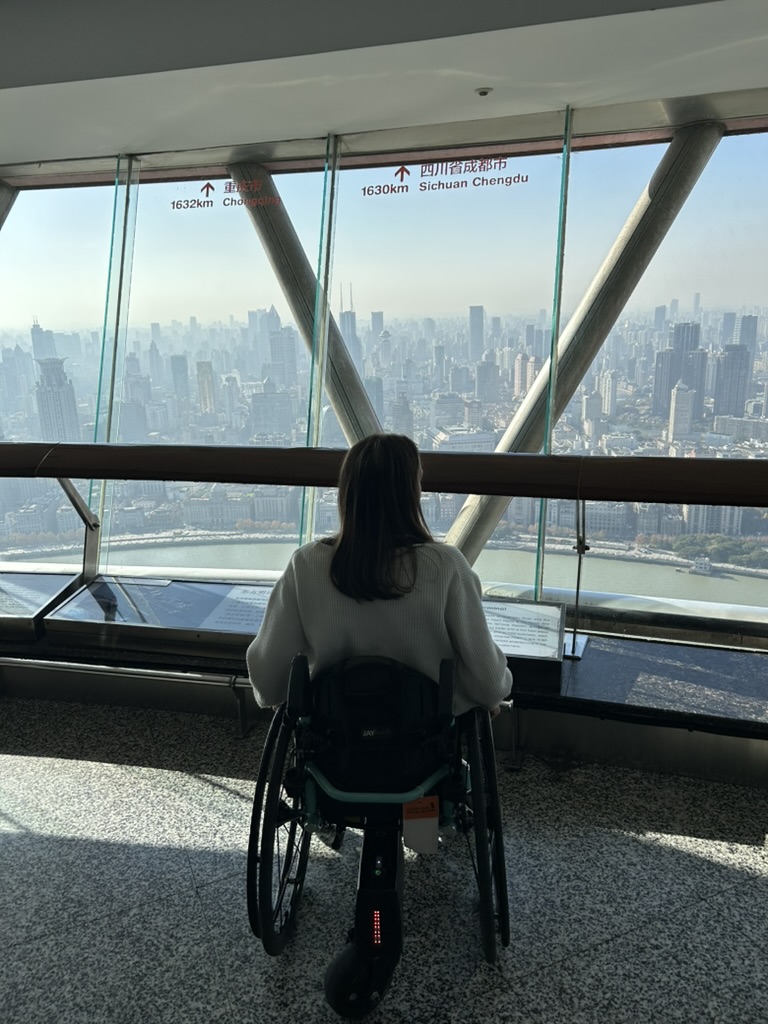
While some of the glass-floor experiences may have narrow entryways, staff are generally understanding and do their best to accommodate. There are accessible restrooms on the main and upper levels, and most public areas—including the lower-level museum and gift shops—are fully wheelchair-friendly.
There is a revolving restaurant within the tower offering a delicious buffet with amazing views. Unfortunately there is a large step down to the dining area where the tables are, this was not too difficult for us but may present problems for people with large electric wheelchairs.
The Shopping Pedestrian Malls of Nanjing Road
Nanjing Road is a bustling hub of activity and one of the most popular shopping streets in the world. Spanning several kilometres, this pedestrian-friendly mall offers a vibrant mix of high-end retail stores, local boutiques, and traditional Chinese shops. From luxury brands to affordable souvenirs, there’s something for everyone to discover. The street transforms beautifully at night, illuminated by colourful neon signs that add an extra layer of allure to the experience.
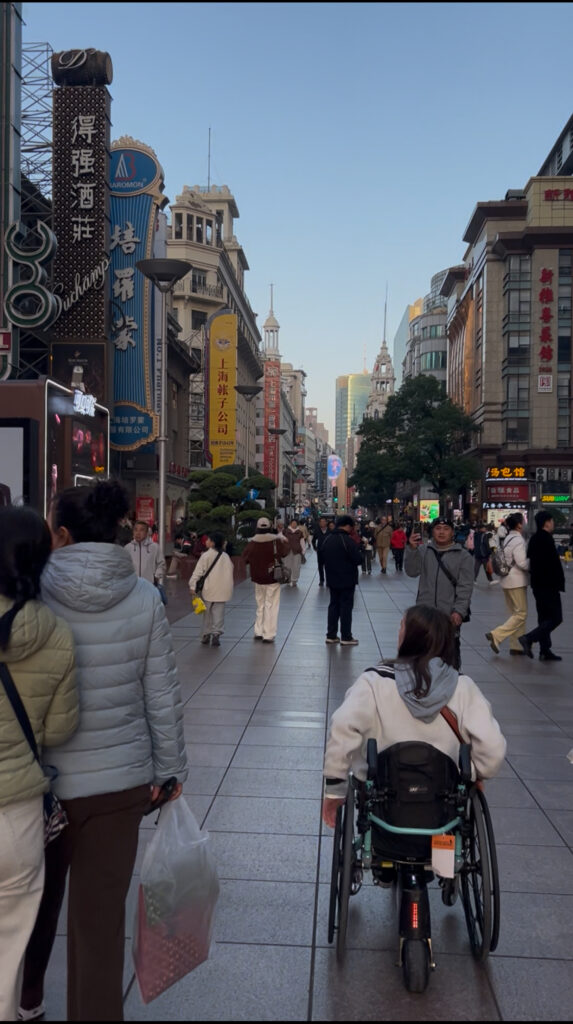
Accessibility on Nanjing Road is relatively better compared to some older areas, with smooth pavements and wide pathways that make navigation more convenient for those using wheelchairs or strollers. However, certain shops and restaurants might still present challenges, with steps at the entrance or limited elevator access. Large crowds during peak times can also make movement slower, so planning your visit during quieter hours can ensure a more enjoyable experience. Whether you’re shopping for unique items or simply taking in the dynamic atmosphere, Nanjing Road is a must-see destination in Shanghai.
Shanghai Disneyland
If you are a Disney fan, you are in for a treat. Shanghai Disneyland is widely considered one of the most accessible theme parks in Asia. The park was designed with inclusivity in mind, featuring step-free pathways throughout the entire resort.
While not every attraction is wheelchair accessible, many rides offer transfer options, and some allow guests to remain in their chairs. Even better, the park also provides discounted entry tickets for visitors with disabilities.
Adjacent to Shanghai Disneyland, Disney Town offers a vibrant and accessible space for dining, shopping, and entertainment. Designers created this pedestrian-friendly area with wide, step-free pathways, making it easy for everyone to get around. You’ll find a variety of restaurants catering to different tastes, with many offering seating arrangements suitable for all guests. Whether you’re in the mood for a quick snack or a leisurely sit-down meal, Disney Town has something to satisfy every appetite.
For shopping enthusiasts, the area boasts a delightful selection of stores, from Disney-themed merchandise at the flagship World of Disney store to unique finds at specialty boutiques. If you’re looking for souvenirs or gifts, there are countless treasures to discover. Disney Town’s accessibility and welcoming atmosphere ensure that all visitors can enjoy exploring, shopping, and dining with ease. It’s the perfect place to relax after a day at the park or to soak up some Disney magic without entering the main gates!
We’ll be writing an in-depth blog about our visit to Shanghai Disney soon, so stay tuned for all the details, tips, and magical moments we experienced!
Finding the Right Accommodation
When it comes to where to stay, international hotel chains are usually your safest bet. Brands you recognize from home tend to adhere to global accessibility standards.
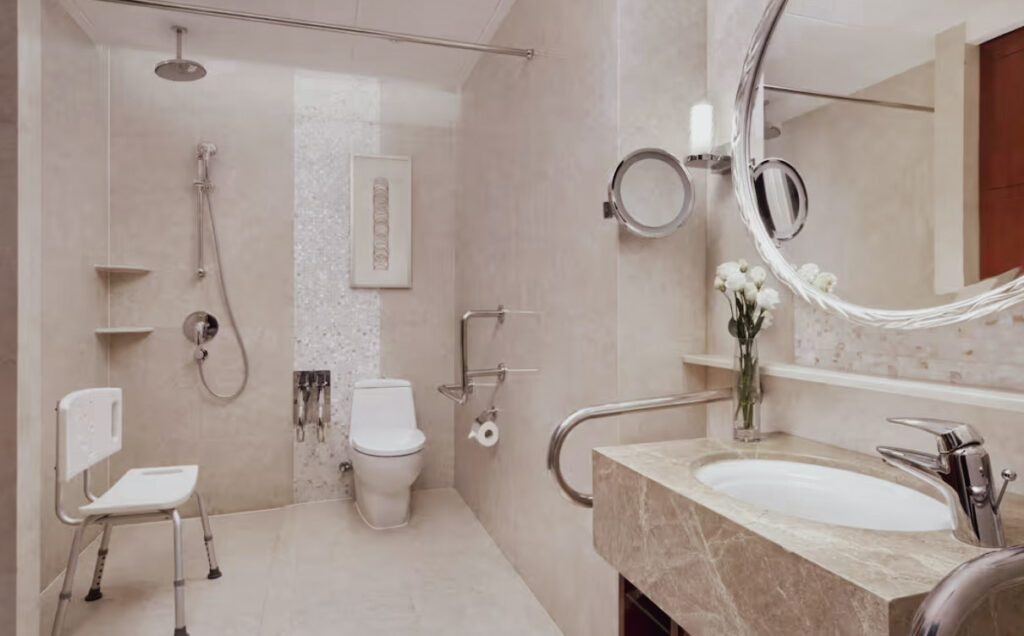
When booking, look for features like step-free entrances, elevators, wide doorways, and roll-in showers with grab bars. However, a word of caution: the definition of “accessible” can vary wildly in China.
We strongly suggest emailing the hotel directly before you book. Ask for photos of the bathroom and the room entrance to ensure it meets your specific needs. As for location, areas like Pudong (newer development), Jing’an, and near People’s Square make great bases of operation because the surrounding sidewalks are generally flat and transport links are close by.
Travelling with accessibility needs in Shanghai is much easier when you find the right place to call home. There are several hotels throughout the city that offer accessible features to ensure your comfort and convenience. We found the Shanghai Marriott Marquis City Centre hotel provided all the amenities we needed in a perfect location. Try booking an accessible double room via Expedia here
Using Booking Platforms with Accessibility Filters
When planning your trip, online booking platforms like Booking.com, Expedia, and Agoda offer excellent tools to help you find accommodations that meet your accessibility needs. Most of these platforms provide filters for features such as wheelchair accessibility, elevators, and other accessible facilities.
Start your search by applying these filters to narrow down your options and save time. However, for peace of mind, it is always a good idea to contact the hotels directly after making your shortlist. Speaking with staff allows you to confirm specific accessibility details that may not be fully outlined online, ensuring that your stay is comfortable and well-suited for your needs.
Tips for Booking Accessible Rooms:
- Contact the property directly, even after booking online, to confirm accessibility details.
- Request photos of the bathroom, entrance, and any key facilities.
- Ask about the nearest accessible metro station and whether airport shuttles or taxis accommodate wheelchairs.
- Read reviews from other travellers with accessibility needs; these often reveal practical insights that hotel listings do not mention.
No matter where you choose to stay, a little extra planning ahead of your trip can help ensure your stay in Shanghai is as smooth and hassle-free as possible.
A Note on Restrooms
Nobody likes to stress about finding a bathroom, so here is the strategy for Shanghai.
Public accessible toilets do exist on the streets, but they aren’t everywhere. However, Shanghai has an abundance of luxury shopping malls, and many of them have clean, accessible restrooms. Major tourist attractions and museums are also reliable spots. We found a very spacious and clean bathroom at The Bund. Avoid relying on smaller restaurants or older buildings, as their facilities are rarely wheelchair accessible.
Finding accessible restrooms while exploring a city can be a challenge, but we have found the Accessaloo app to be very helpful. This user-friendly app is designed to help people locate accessible bathrooms nearby with just a few taps. Whether you’re navigating a bustling urban area or exploring quieter neighborhoods, Accessaloo provides detailed information about facilities, including accessibility features like wide doorways, grab bars, and more. Users can also leave reviews and ratings to help others who might benefit from their insights. It’s a handy tool to have at your fingertips, ensuring comfort and confidence during your adventures.
Pro-Tip: Public restrooms often do not provide toilet paper. Always carry a small pack of tissues with you!
Language Barriers
Let’s address the elephant in the room: the language barrier. In Shanghai, the official language is Mandarin Chinese.
So, do you need to be fluent to visit? Absolutely not! But knowing a few key phrases goes a long way. Locals really appreciate the effort. A simple “Ni hao” (Hello) and “Xie xie” (Thank you) can bring a smile to anyone’s face.
We found some English is spoken by the hotel staff and in many tourist areas, but it isn’t guaranteed everywhere.
Technology is your best friend here. Communication often happens through translation apps. Baidu Translate is the local favorite, but generic translation apps with offline modes work too. Alipay also has a built-in translation tool supporting 14+ languages. It can provide real-time Chinese-to-English translations, making tasks like getting directions, ordering food and scanning menus much easier.
Don’t be shy about typing what you need into your phone and showing the screen to someone. We typed in “Where is the elevator?” or “Is there a ramp?” many times! People are generally very patient and willing to help.
We have found that Shanghai locals are generally curious and kind. Even if they don’t speak English, many people will try to help you if you signal that you need assistance.
The Verdict: Go For It!
So, how do we rate Shanghai? For a mega-city in Asia, we give it a solid 7.5/10.
It offers one of the best metro systems we’ve seen, fantastic modern attractions, and smooth riverfront cruising. Yes, you will have to deal with crowds, the occasional blocked sidewalk, and some inaccessible older districts. But these challenges are manageable.
Shanghai is a city that rewards curiosity. Don’t be afraid to wander down a side street, try a food you can’t pronounce, or strike up a conversation (even in sign language!) with a local. The energy here is contagious, and we guarantee you’ll leave with memories to last a lifetime.